Aug 3, 2024
How Bryson DeChambeau Used Sportsbox Data to Get Dialed In for the 2024 U.S. Open

A case study in using 3D motion data to identify a miss, calibrate a swing change, and protect a trusted movement pattern under major-championship pressure.
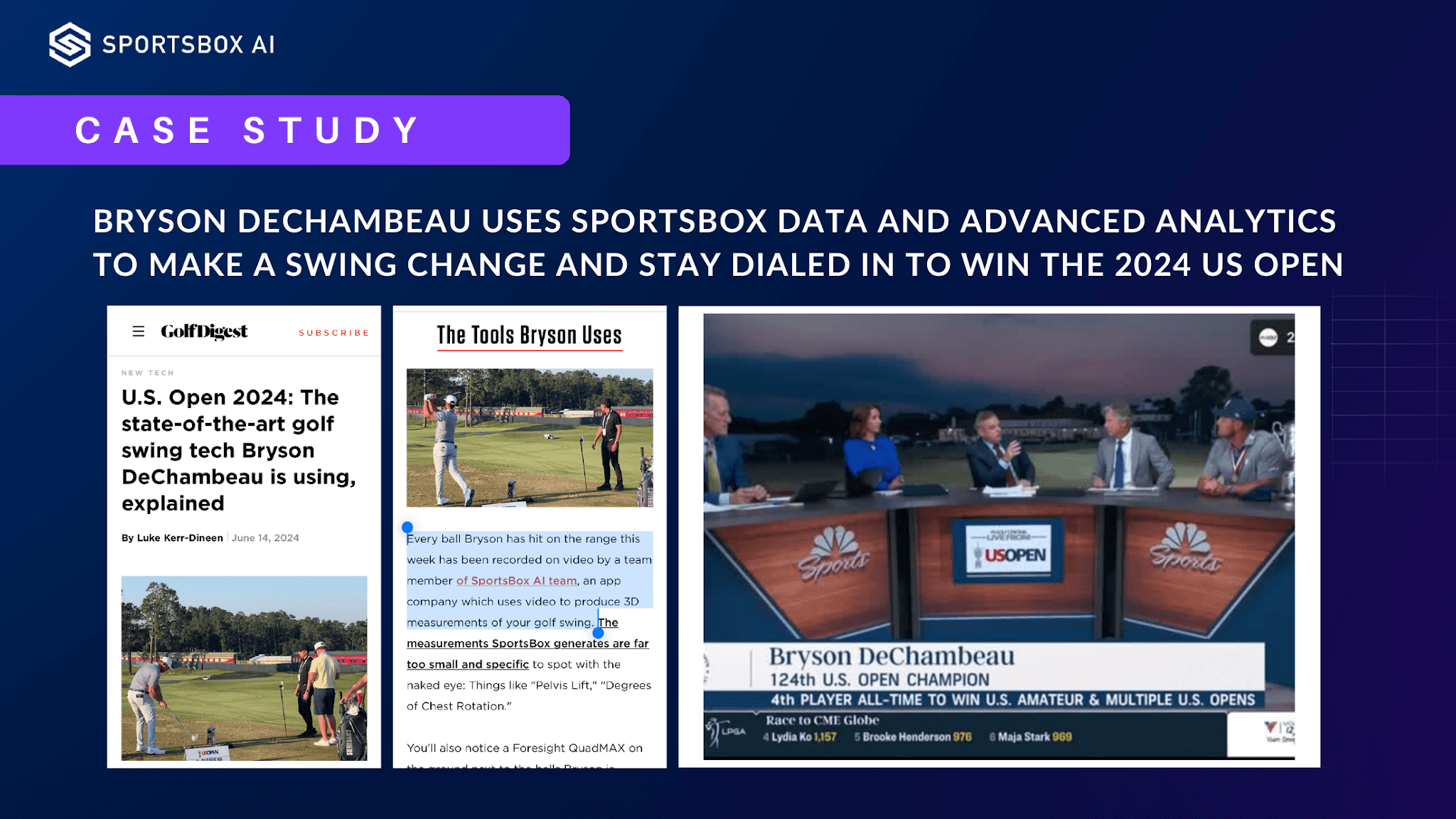
When Bryson DeChambeau arrived at Pinehurst No. 2 for the 2024 U.S. Open, he was not simply trying to “find a feeling.” He and his coach, Dana Dahlquist, had spent the previous week using Sportsbox 3D motion data, paired with Foresight Sports GCQuad shot data, to answer two very specific questions: What was happening in Bryson’s body when his ball started to miss right? And how was his current swing different from the swing he trusted at his very best?
That distinction matters. Elite players rarely need more generic swing information. They need a way to separate signal from noise, identify what is actually connected to a miss, and return to a movement pattern they know can perform under pressure.
For Bryson and Dana, the reference point was clear: Bryson’s “58 swing,” the motion pattern he associated with the 58 he shot in August 2023. In the week before the U.S. Open, however, he was struggling with a push-fade pattern. The goal was not to rebuild his swing. It was to understand what had changed, find the movement variables most closely associated with the unwanted ball flight, and give Bryson a measurable way to get back to his best.
From a Miss to a Measurable Question
The process started at LIV Houston on June 4, 2024. Sportsbox collected 3D motion data while Foresight Sports GCQuad captured the corresponding shot data. Importantly, the data was gathered not only on the range, but also on the golf course.
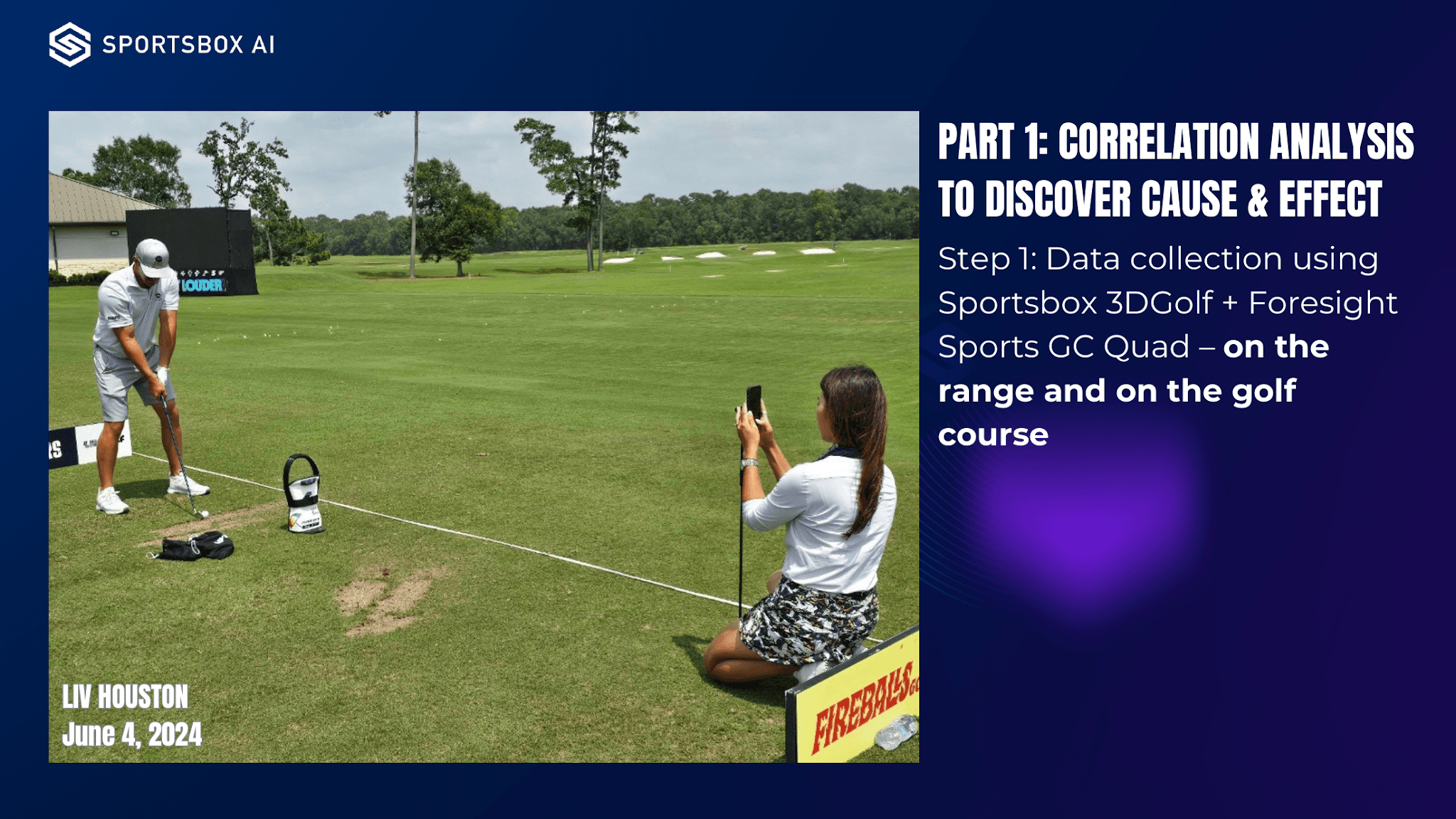
That created a dataset connecting what Bryson’s body was doing with what the golf ball actually did.
The Sportsbox data science team then ranked the available movement variables by the strength of their correlation to spin axis. In this analysis, a more positive spin axis represented the miss Bryson and Dana were trying to reduce. Instead of looking at dozens of numbers independently, the analysis helped narrow the field to a small group of movement variables that appeared most relevant.
Dana and the Sportsbox team then selected three to four variables that were both meaningfully related to the shot pattern and practical for Bryson to work on.
Finding the Movement Behind the Ball Flight
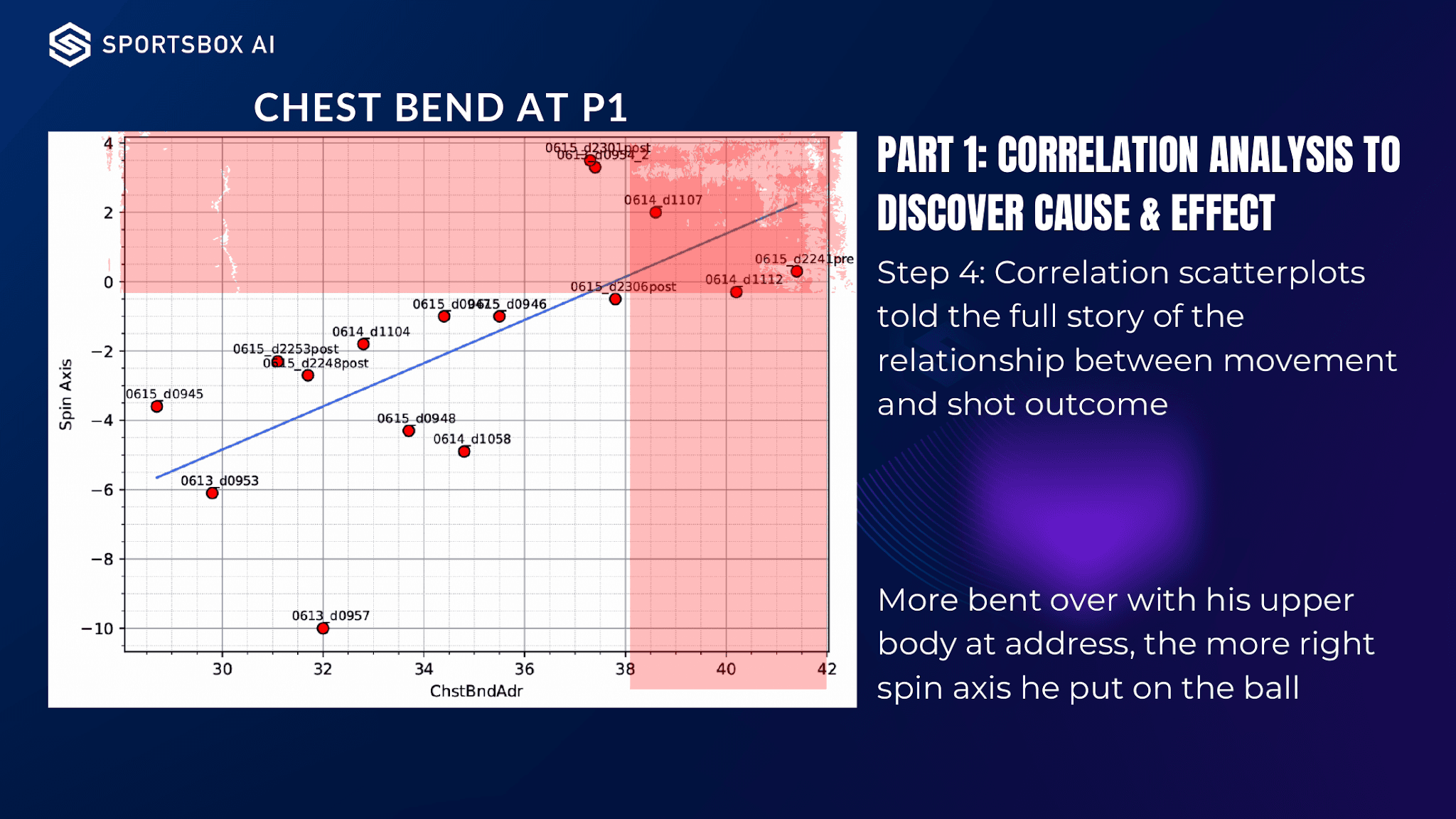
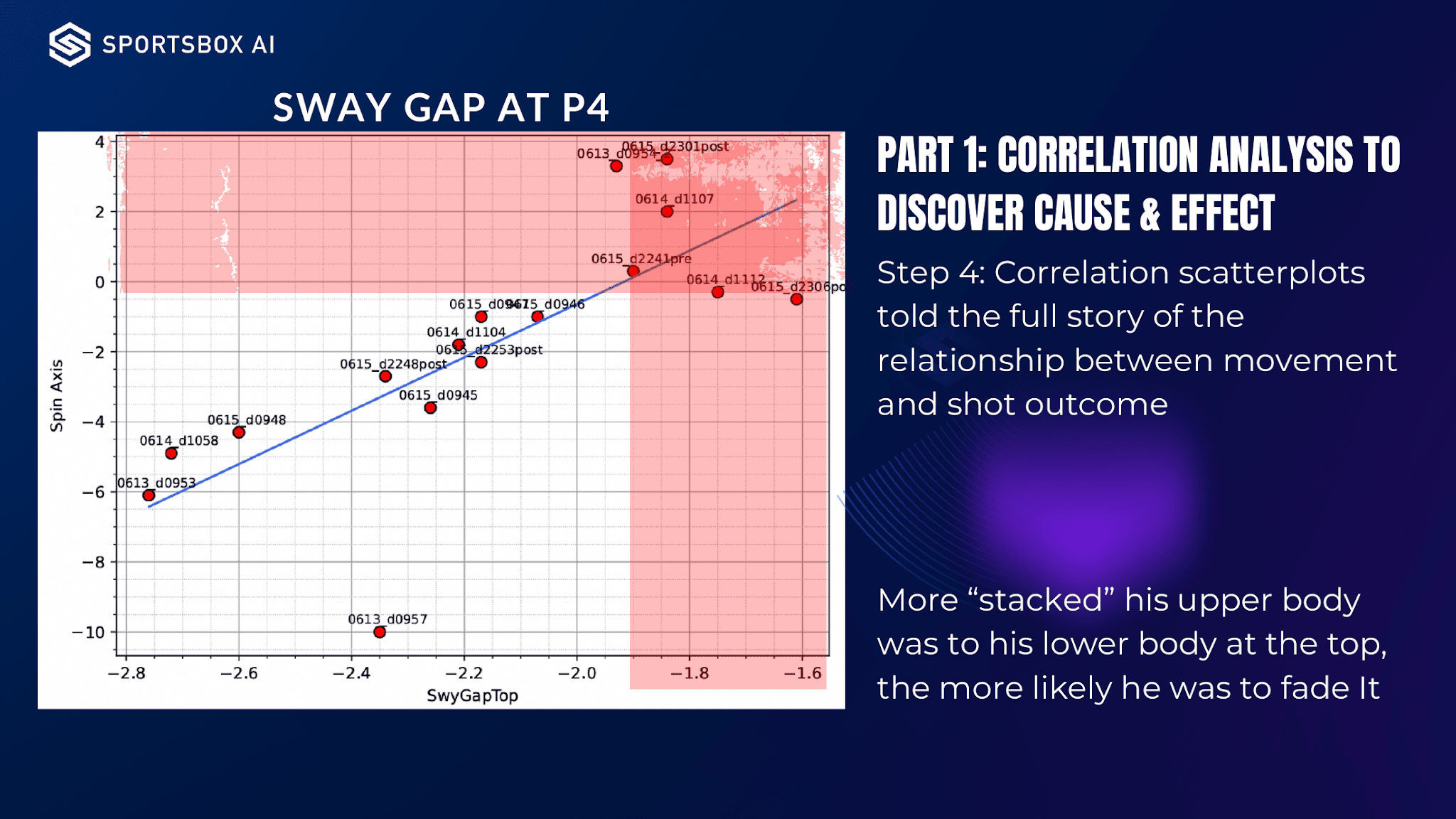
The scatterplots revealed several relationships.
One was chest bend at address. The more Bryson bent his upper body forward at P1, the more rightward spin axis he tended to produce.
Another was sway gap at the top of the backswing. In Bryson’s case, the analysis showed that when his upper body became more “stacked” relative to his lower body at P4, he was more likely to hit the fade he was trying to avoid.
Pelvis sway at P4 showed a similar relationship: when Bryson moved more onto his lead side at the top, the ball was more likely to fade.
This is where data becomes useful rather than merely interesting. The conclusion was not “here are three unusual things in Bryson’s swing.” The data gave Bryson and Dana evidence about which movement patterns were connected to the specific miss they were trying to solve.
Sportsbox did not prescribe the swing change. That remained the job of Bryson and Dana. The role of the analysis was to make the relationship between movement and outcome visible, so the player and coach could make a clearer decision.
Turning the Analysis Into a Usable Swing Cue
Once Bryson understood the movement pattern associated with the miss, the next step was calibration.
Bryson and Dana developed an “input” — a feel or intention Bryson could use — that reliably produced the sway and sway-gap numbers they wanted at the top of the backswing. The critical part was that the feel could now be validated against objective movement data.
That creates a much tighter feedback loop than relying on feel or ball flight alone. A player can feel one thing and do another. A good shot can also come from a movement the player does not necessarily want to repeat. By measuring the body directly, Bryson could test whether his chosen cue was actually producing the intended change.
By Wednesday at Pinehurst, the process had clicked. Bryson’s response captured exactly what the team was trying to achieve: “Guys, this feels like my ‘58 swing.’”
The feeling mattered. But now it was supported by a measurable match to a movement pattern he already trusted.
Staying Dialed In During Championship Week
Solving the initial problem was only the first half of the case study.
Once Sportsbox had Bryson’s “ideal swings” in the system, those swings became a baseline. The team could compare data from subsequent days against that reference and quickly identify whether anything meaningful had changed.
Instead of arriving at the range each day wondering, “Does my swing still look right?” the team could perform a comparison and gap analysis against a known-good pattern.
For an elite player in a major championship, that is a fundamentally different use of technology. The purpose is not to chase perfect numbers. It is to reduce uncertainty.
Tournament weeks create endless opportunities for players to second-guess themselves. A few poor shots can trigger a search for fixes even when the underlying motion has barely changed. Having a trusted baseline can help a player and coach determine whether there is actually a movement issue worth addressing — or whether the right decision is to leave the swing alone.
According to the Sportsbox case study, the result was “100% confidence in his swing throughout the week.” Bryson went on to win the 2024 U.S. Open.

What This Case Study Says About the Future of Golf Instruction
The lesson from Bryson’s week is not that every golfer should obsess over more swing data. It is almost the opposite.
The best use of data is to make the problem smaller.
Start with a specific question. Collect movement and shot data. Identify the few variables that actually appear connected to the outcome. Let the coach decide what change to make. Then use measurement to validate whether the player is producing the intended motion — and preserve a baseline of what “good” looks like.
For Bryson, Sportsbox helped turn “I’m missing it right” into a measurable chain of cause and effect. It helped Bryson and Dana connect a swing cue to the body movements they wanted. And once they found the pattern they trusted, the same data helped them protect it throughout the most important week of the year.
That is the real promise of 3D swing data: not replacing a coach’s expertise or a player’s feel, but giving both of them a clearer feedback loop.
At the highest level of golf, confidence often comes from knowing what to trust. At Pinehurst, Bryson had more than a feeling. He had his numbers.